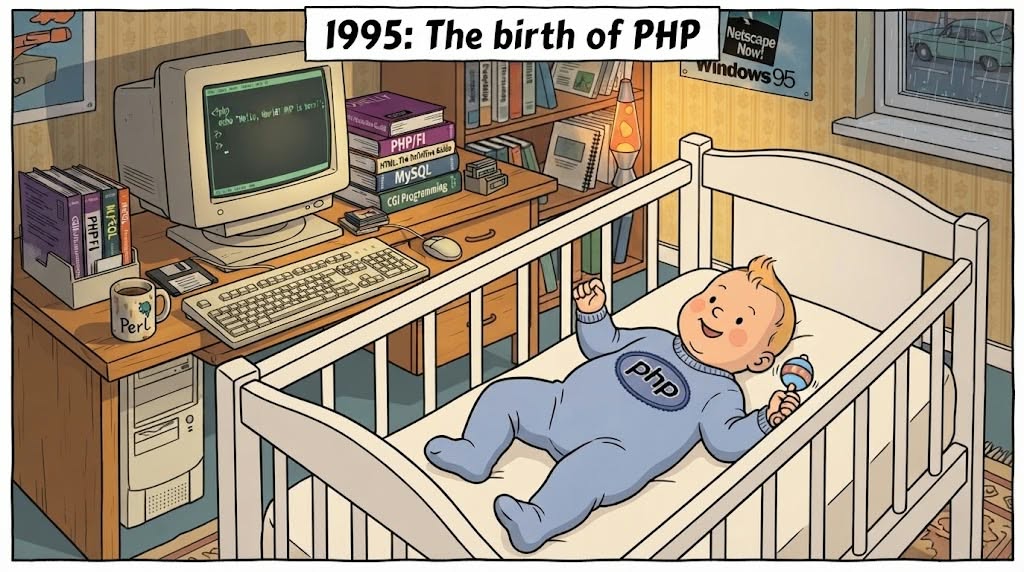
A handy scripting language called PHP was born.
Now, HTML web pages could be enhanced with logic and calculations.
Sweet and innocent.
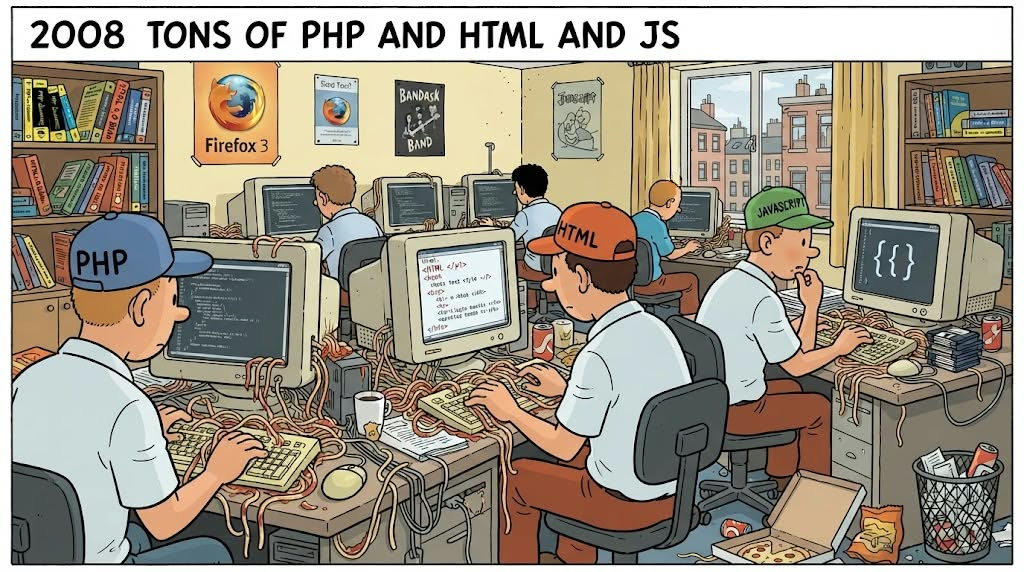
PHP proved to be infinitely flexible and fast. Massive applications were built, consisting of tens of thousands of lines of code—with all the PHP, HTML, and JavaScript mixed together like a big bowl of spaghetti.
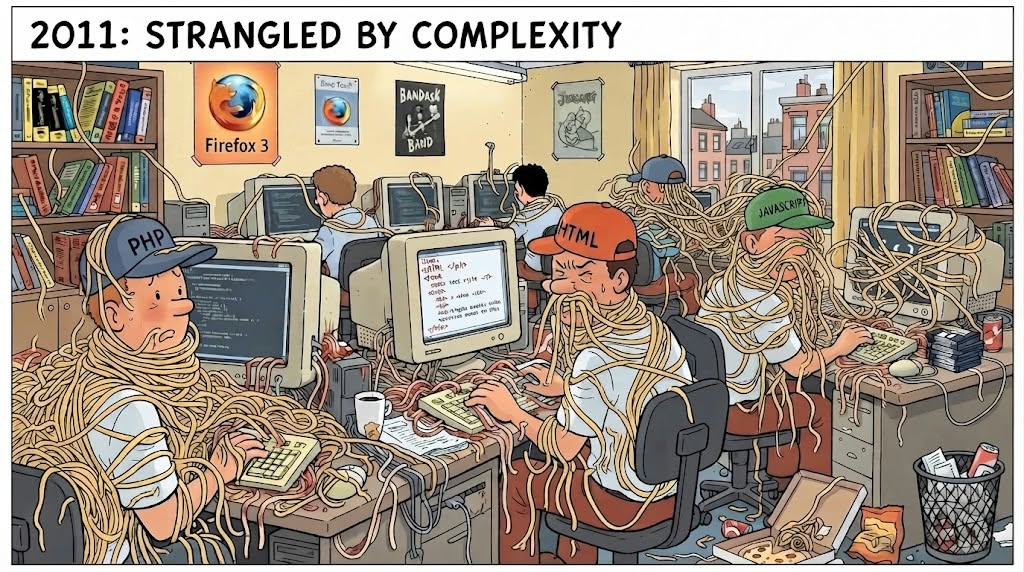
PHP imposes no restrictions whatsoever on developers, and that is precisely the problem. Unbridled 'creativity' combined with frequent turnover among developers resulted in spaghetti code that no one could understand anymore.
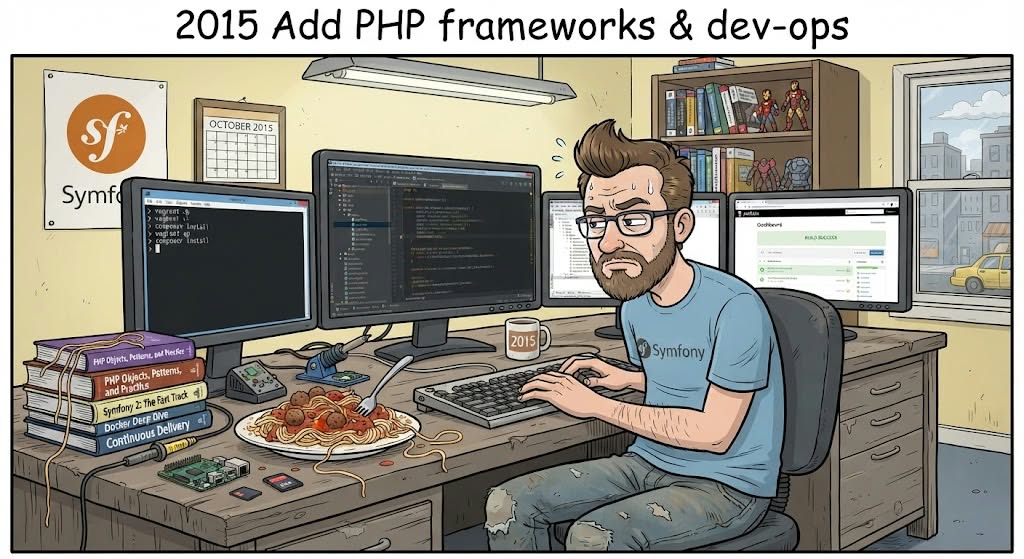
Various frameworks, led by Symfony, introduce mandatory structures. That helped. DevOps practices are emerging for virtually everything: 'magical automation.' We’re going to do better!
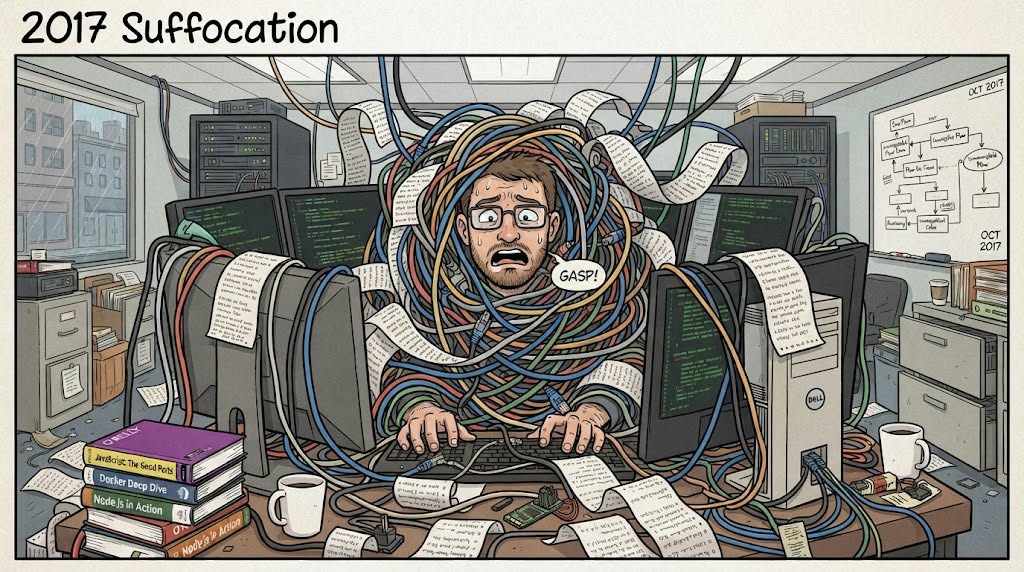
But the codebase grew larger and slower. The mandatory standards consumed a great deal of extra time. Every (new) developer brought along their own favorite set of 'dev-toys'. The overlap, configuration files, and version dependencies ate up all available development capacity.
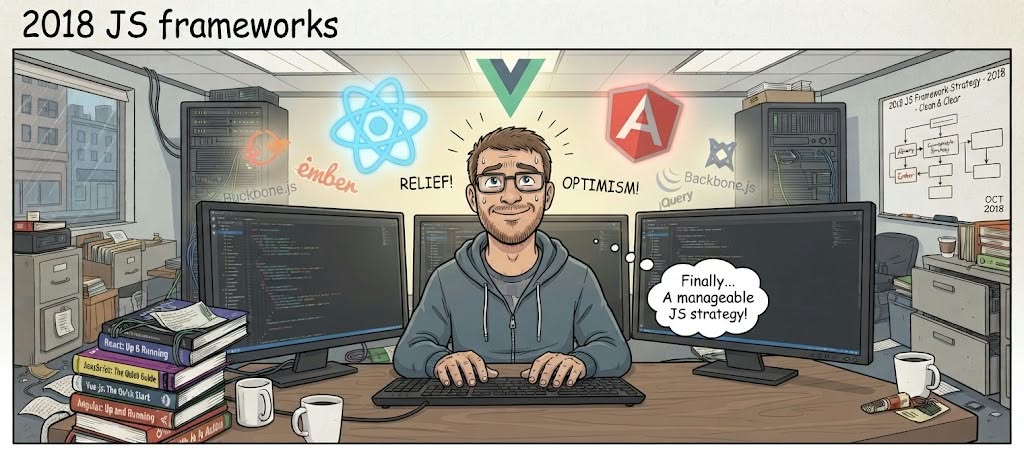
During this era, JavaScript frameworks (such as Vue, React, and Angular) made their debut. From then on, we reduced (PHP) backends to 'black boxes'. The UI was effectively beheaded. The new world of possibilities seemed endless... for developers!
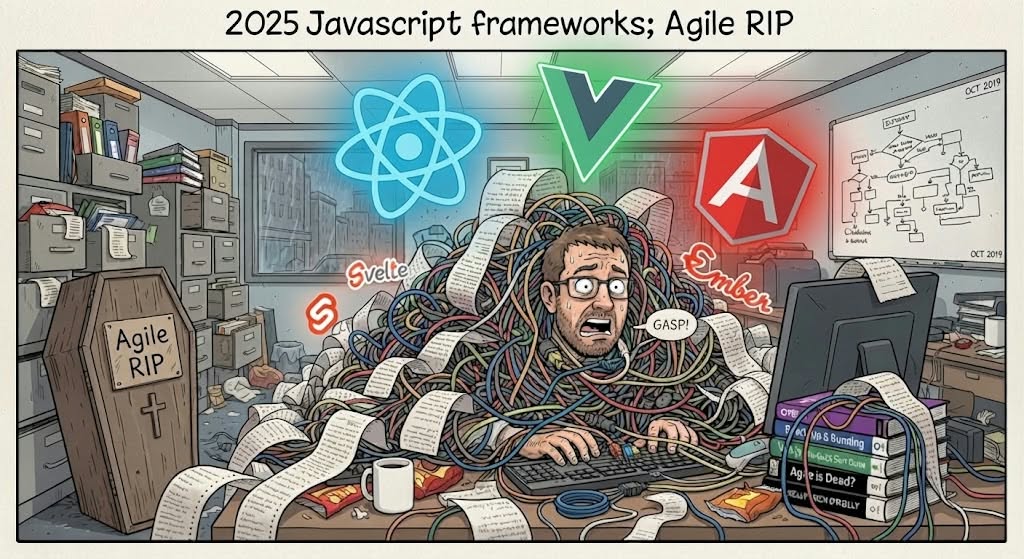
JS frameworks are extremely heavy. Pages load slowly. Development teams double in size: the workload doubles, while speed is cut in half. Every change has to be implemented in both the backend and the client. This is the end of Agile.
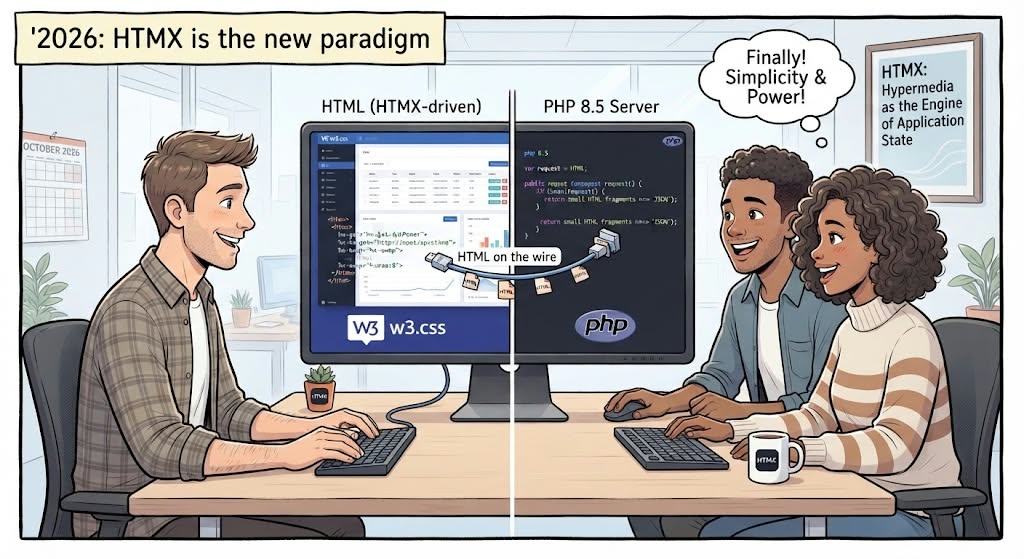
With HTMX, it is easy to live update portions of HTML, which are delivered live from the (PHP) backend. All definitions, data, validations, and logic exist in only one place: on the server. Yet, the user experiences direct interaction.
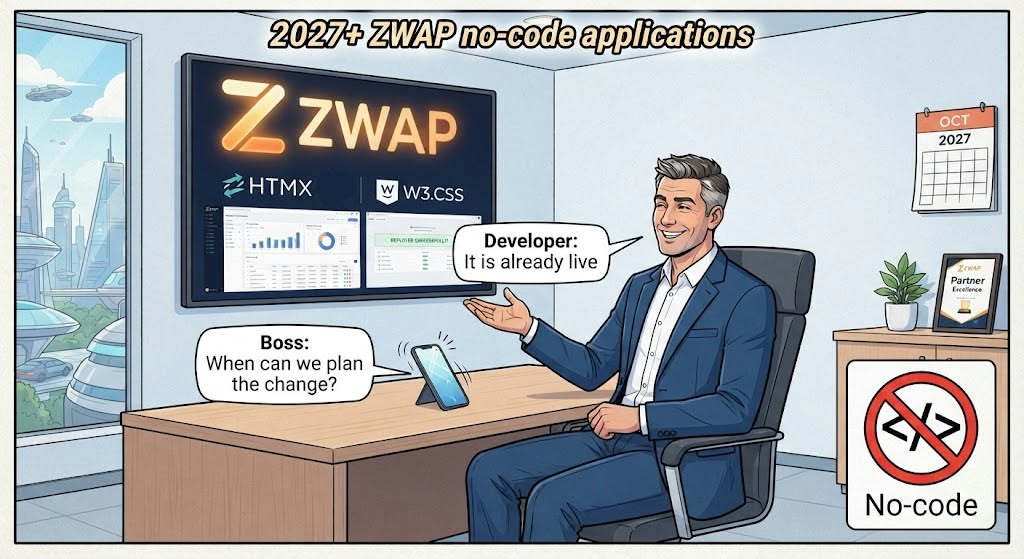
ZWAP relies solely on definitions: no code! Go from idea to testing and then to live in a matter of minutes. Stop the meetings, planning, backlogs, versioning, and migrations and, above all, stop programming.


